
A personal exploration of the space between craftsmanship and industrial production.
2026

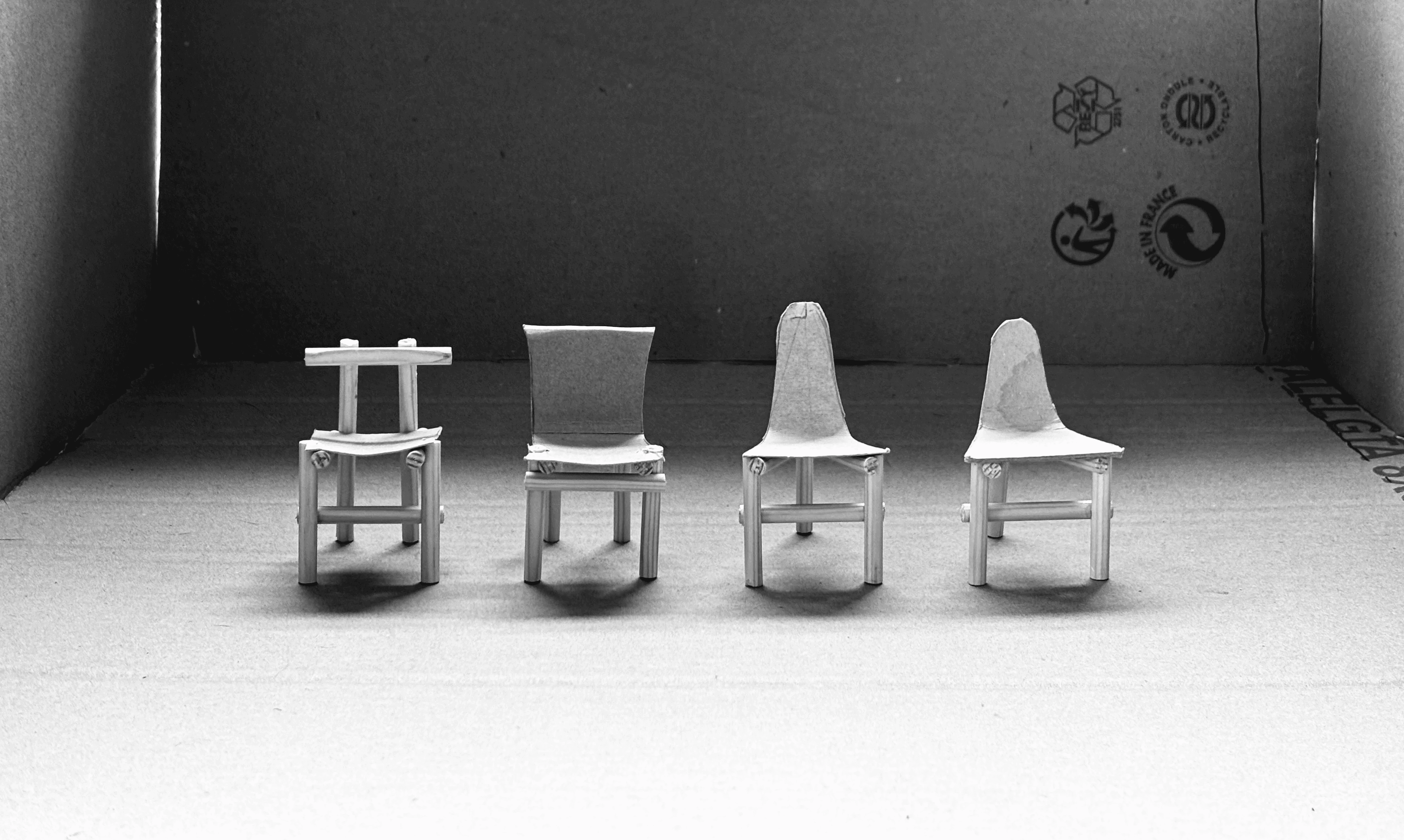
Parallel began with a simple question: how can the same form emerge from two fundamentally different design logics? Throughout my educations (woodwork and productdesign), I found myself drawn to both the world of craftsmanship and the world of industrial production. Rather than seeing them as opposing approaches, I wanted to understand how each shapes the design process in its own way.
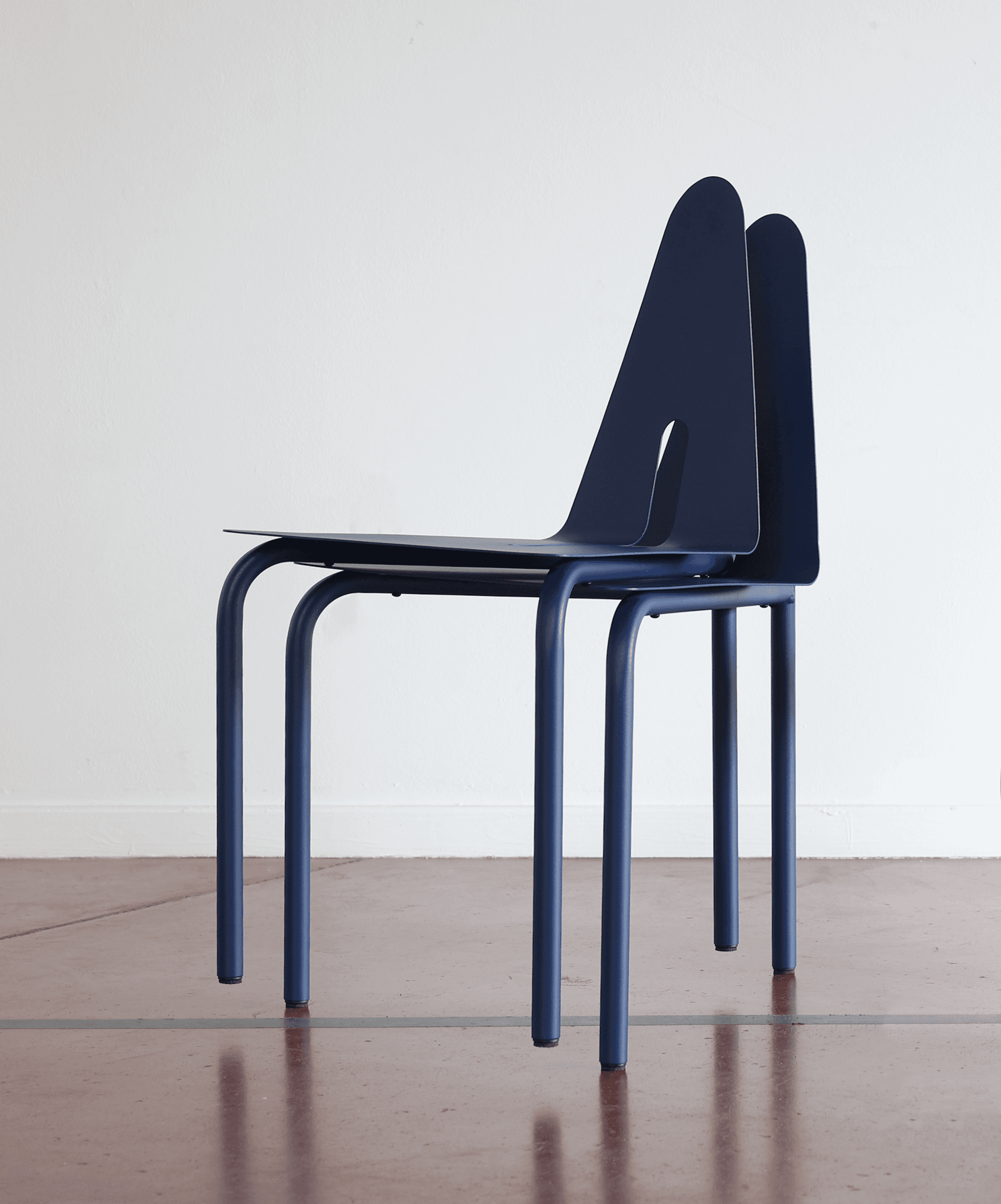
The project began with the design of a single chair silhouette that would serve as the foundation for two entirely different interpretations. Inspired by the medieval three-legged stool, whose anonymous origin and honest construction have fascinated me for years, I developed a silhouette that could be reinterpreted through two fundamentally different design logics.
Handcrafted version
Although both chairs originate from the same silhouette, they gradually evolved into two independent interpretations.
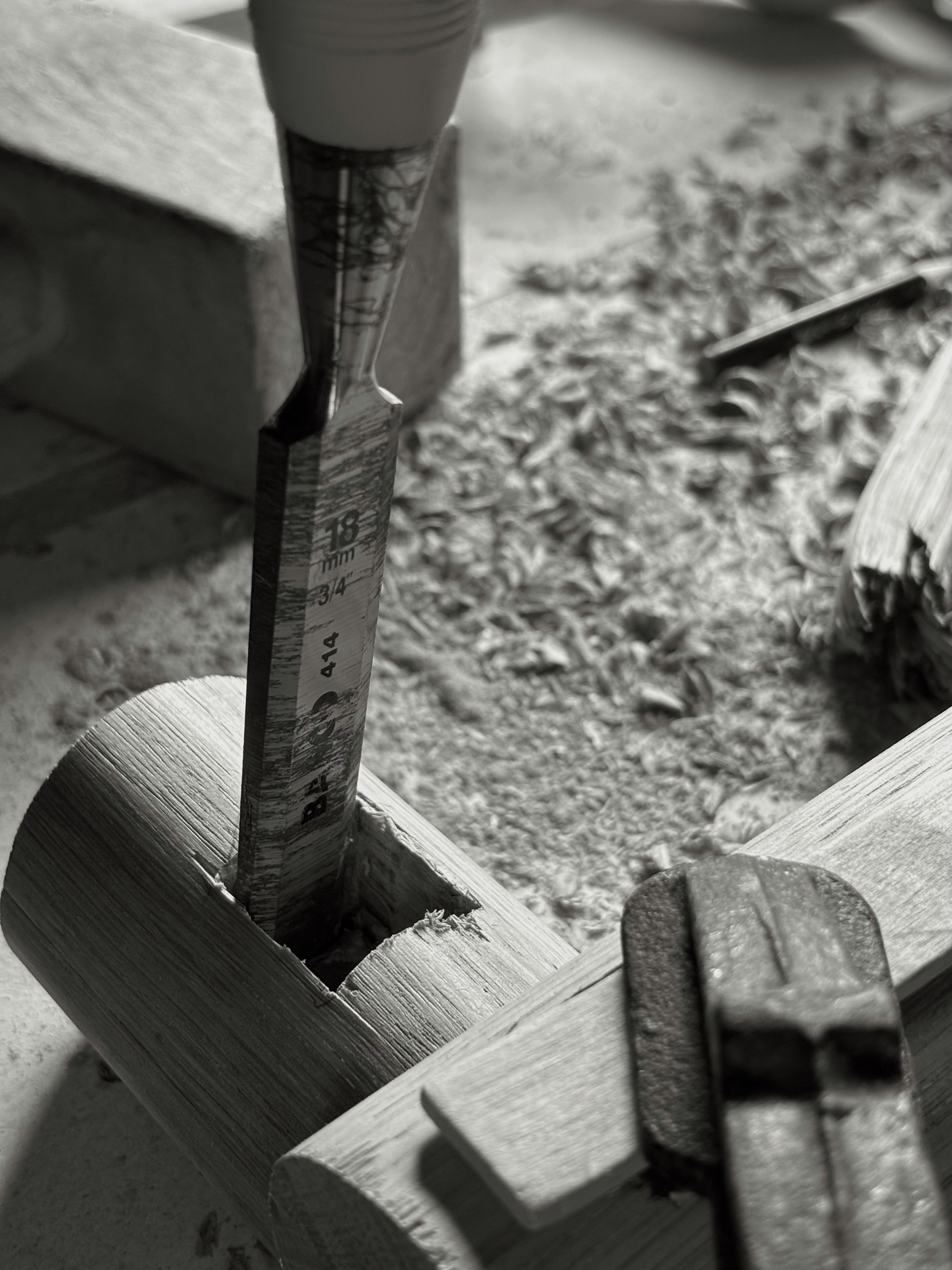
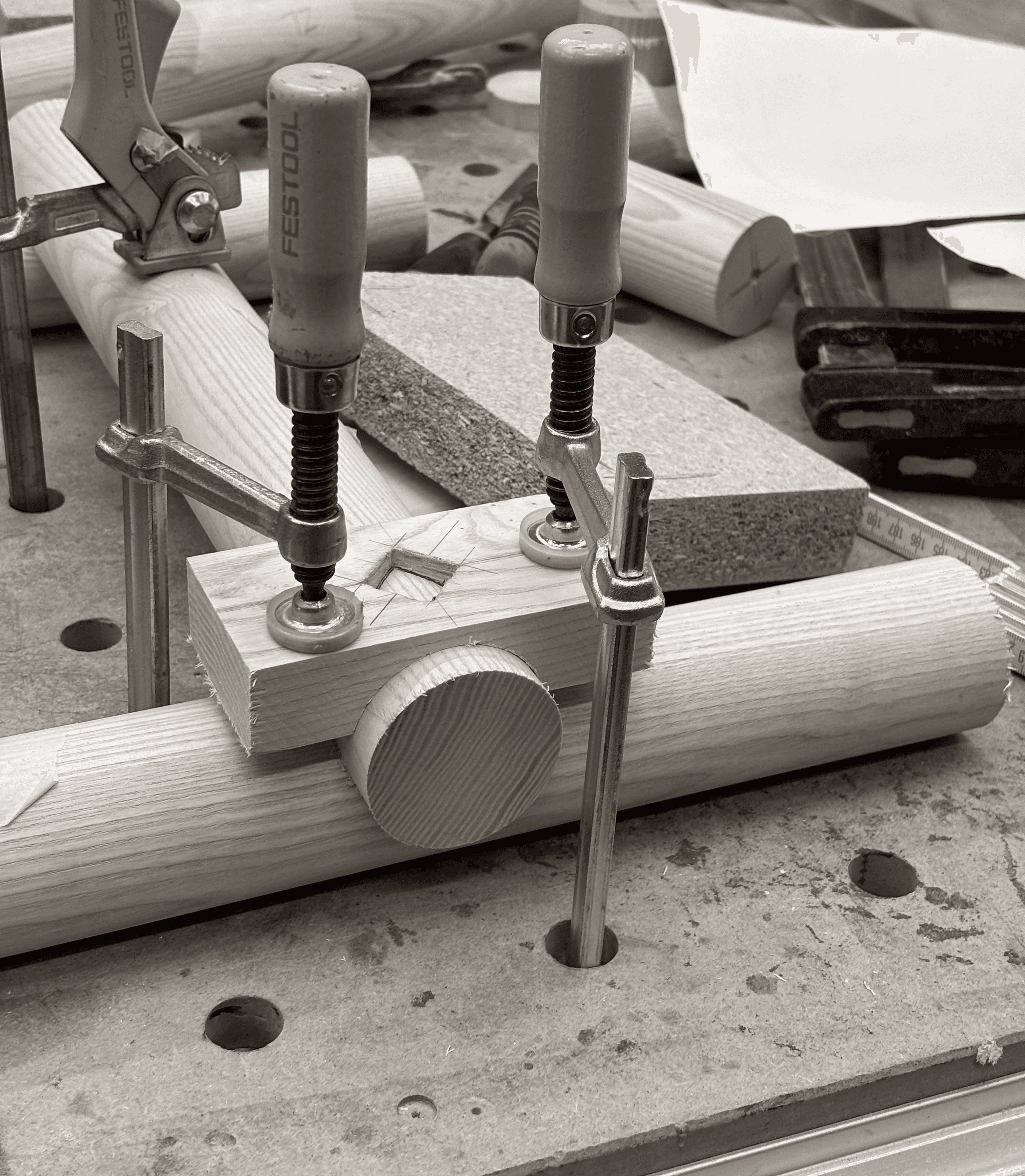
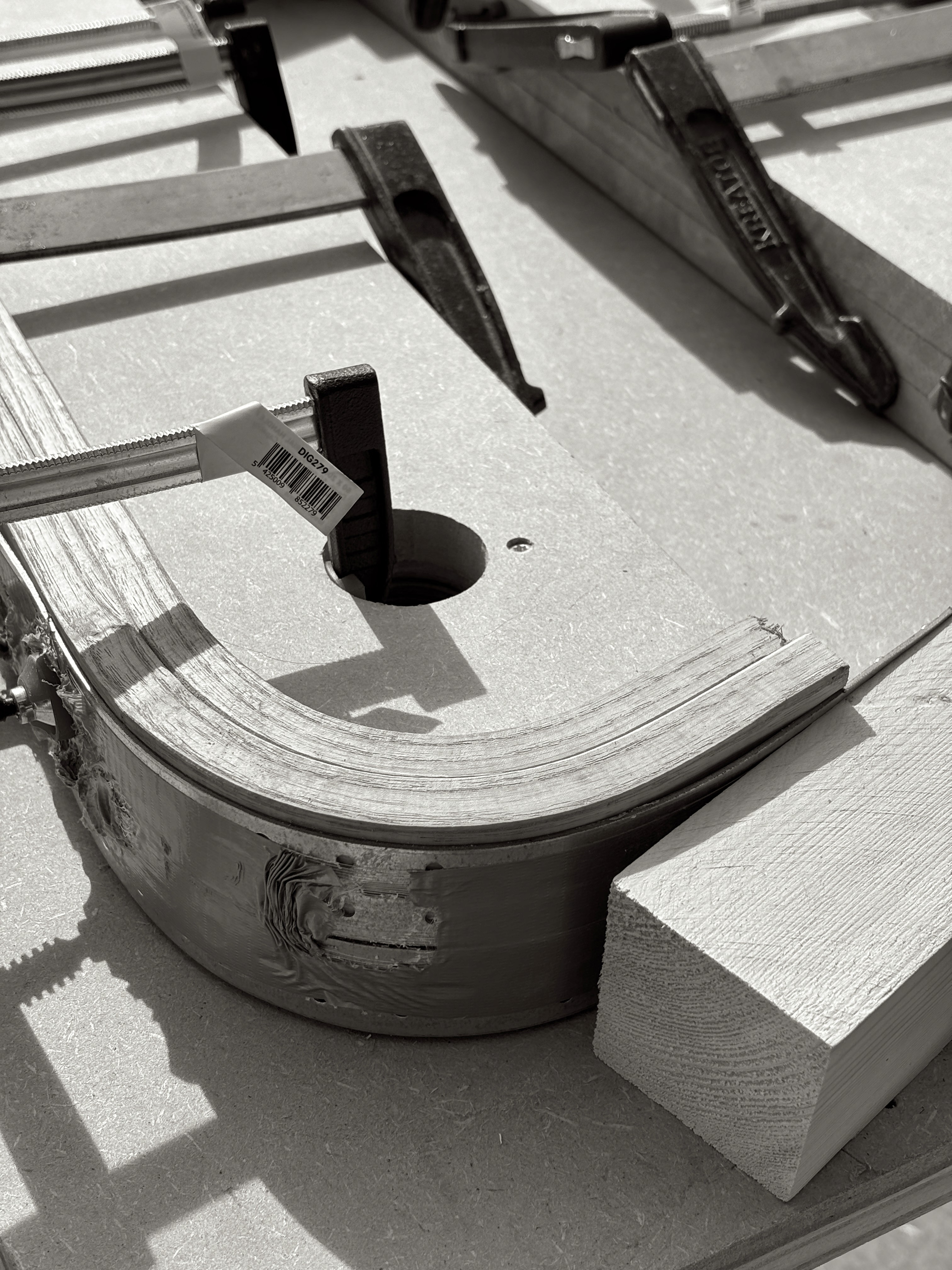
The handcrafted version explores the richness of traditional woodworking. Steam-bent solid ash, laminated veneer, woodturning and wedged mortise-and-tenon joints all become visible parts of the design. Every mould, every component and every detail was produced without CNC machining, allowing craftsmanship itself to define the character of the object.


Industrial version
The industrial chair follows the opposite logic. Laser-cut sheet steel, bent profiles and welded assemblies create a construction optimised for serial production. Every connection was designed to simplify alignment, reduce assembly time and minimise material waste, making the chair suitable for automated manufacturing.
Rather than competing, both objects demonstrate that production is an active design tool. Material, construction, detailing and even the intended market evolve naturally from the chosen manufacturing process.


Product sheets.


Exhibitions
Design Nation
Selected by We Are The Next Generation for presentation at Design Nation.
Location
Kortrijk, Belgium
Dates
15–16 October 2026
WONDER Creativity Festival
Presented as part of We Are The Next Generation at the WONDER Creativity Festival.
Venue
Budafabriek
Location
Kortrijk, Belgium
Dates
27 October – 8 November 2026
Brussels Furniture Fair — BDI
Selected for presentation by Brussels Design Island (BDI) at the Brussels Furniture Fair.
Location
Brussels, Belgium
Timing
8-11 November 2026
Continue exploring
Other object investigations


