
Reimagining restorative rest in the workplace.
Developed in collaboration with Davina Mille, Linde Vanhoorne, Sooi Oosthuyse and Phyllis Laleeuw.
2024

tRUST is the result of a year-long research project exploring wellbeing, workplace culture and the role of restorative rest.
Although the benefits of short power naps are well documented, sleeping during working hours is still widely associated with laziness or reduced productivity. Rather than designing another sleep pod, the project investigates how design can help normalise rest as part of a healthy and productive working environment.
The aim was not simply to create a place to sleep, but to design an environment where people feel comfortable taking a short restorative break without feeling exposed or judged.
The project combined literature studies, expert interviews, user research, prototyping and iterative testing to better understand the relationship between sleep, productivity and workplace behaviour.
One insight became central throughout the process: the greatest barrier to workplace napping is rarely the lack of space, but the social perception surrounding rest. This shifted the design challenge from creating a sleeping facility towards creating an environment that legitimises restorative breaks within professional and educational settings.
Through multiple prototypes and user evaluations, aspects such as privacy, accessibility, ergonomics and ease of use were continuously refined. Research also demonstrated that power naps of approximately twenty minutes can improve concentration, creativity, reaction time and memory while reducing stress and mental fatigue. These insights formed the foundation for every design decision.
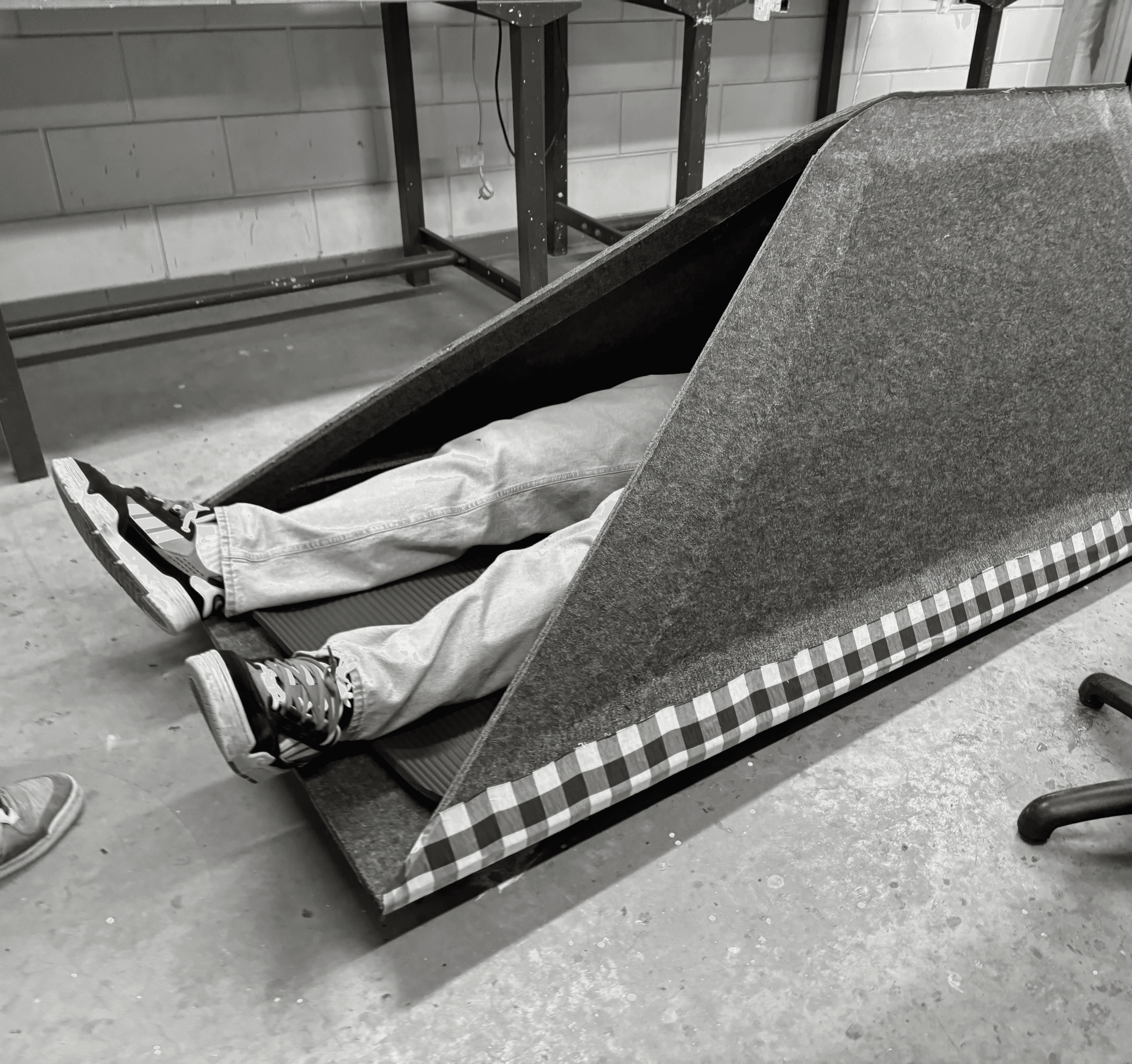

tRUST demonstrates how design can influence not only products, but also behaviour.
Rather than presenting rest as the opposite of productivity, the project reframes it as an essential condition for sustained focus, creativity and wellbeing. The shelter is not intended as a place to withdraw from work, but as a carefully designed intervention that encourages healthier rhythms within contemporary workplaces and educational institutions.
Developed through an extensive research process, the project illustrates how evidence-based design can translate scientific insights into a tangible product that supports both individual wellbeing and organisational performance.


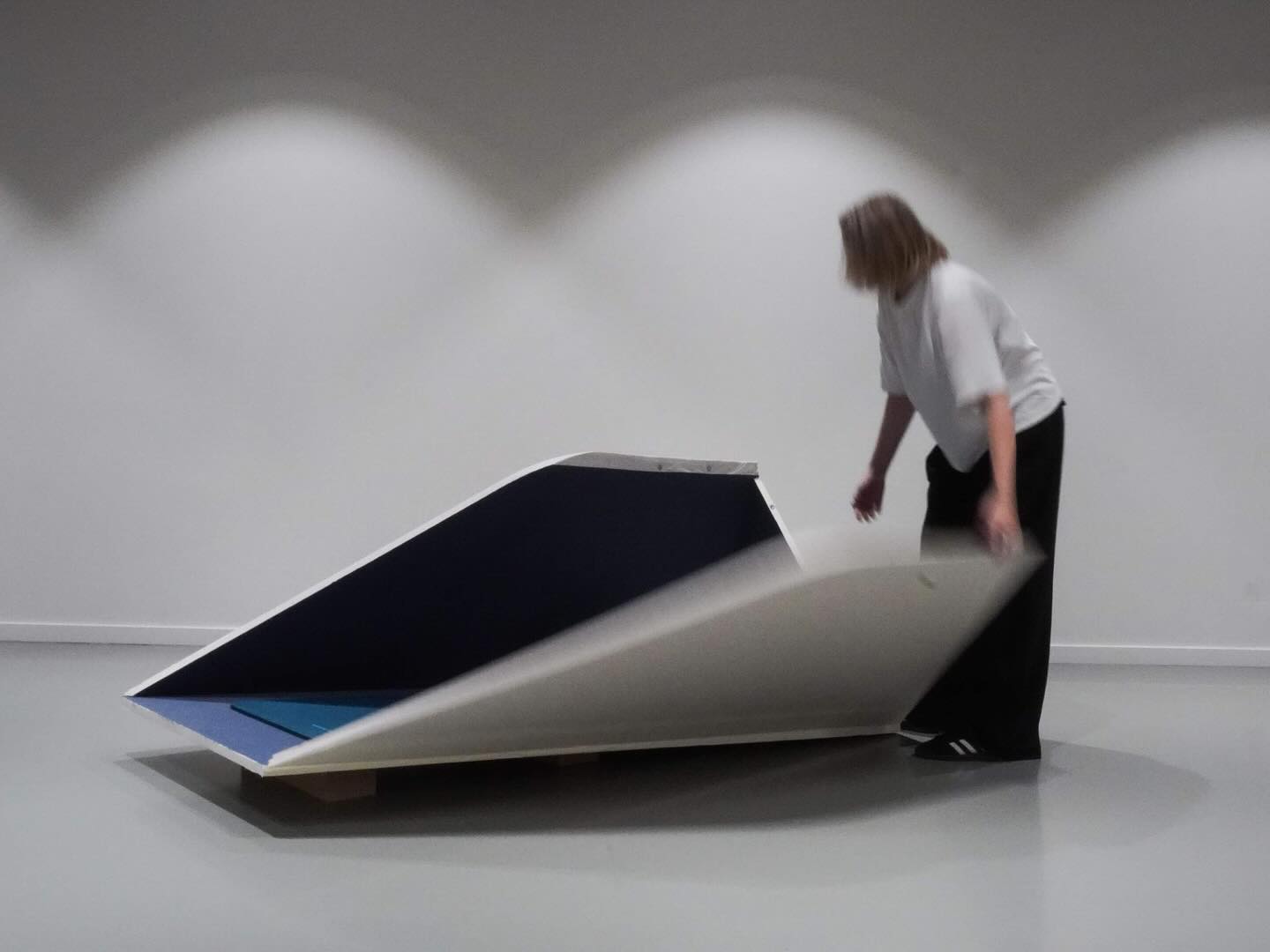


Details
Dimensions (H × W × D)
767 x 2000 x 900 mm
Materials
Acoustic PET felt, air-purifying textile.
Construction
Foldable panel system
Application
Office environments, educational institutions and healthcare facilities.

Continue exploring
Other object investigations


